
Trap and stopper cleaning
Many bathroom sink clogs sit in the pop-up stopper or the trap. Removing and cleaning these parts can restore flow without going deeper into the line.
A clogged drain is easy to ignore until it backs up at the worst moment. We clear kitchen, bathroom and laundry drains in Dana Point homes, and we look at why the clog formed so the fix lasts longer than a weekend.
Different fixtures clog for different reasons. Matching the symptom to the fixture is the first step toward the right kind of drain clearing.
| Fixture | What you notice | Common causes |
|---|---|---|
| Kitchen sink | Water pools after washing dishes, gurgling, a sour smell from the drain | Grease and food residue that cools and builds up along the pipe walls; disposal waste |
| Bathroom sink | Slow draining, standing water around the stopper | Hair, toothpaste and soap residue collecting on the pop-up stopper and in the trap |
| Tub or shower | Ankle-deep water during a shower, slow emptying | Hair combined with soap film; occasionally small objects |
| Toilet | Weak flush, water rising toward the rim | Too much paper, wipes or items that should not be flushed |
| Laundry standpipe | Overflow when the washer drains | Lint and fibers, or a standpipe that cannot keep up with the washer's discharge |
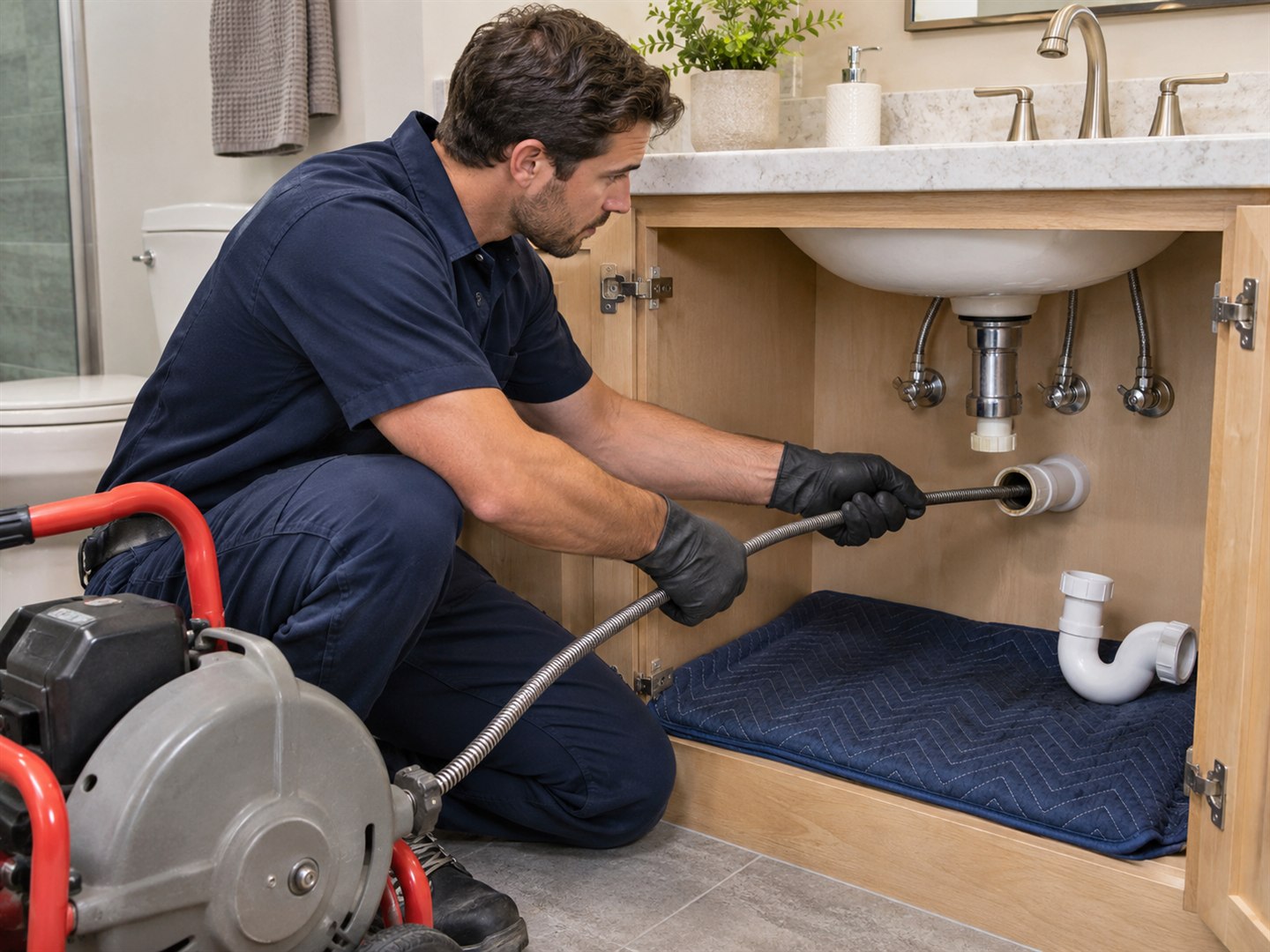
When only one sink or tub is slow, the restriction is usually close to that fixture: in the trap, the tailpiece or the first stretch of branch drain. These clogs are common and are often cleared in a single visit.
When several fixtures act up together, the picture changes. Water rising in the shower when the toilet flushes, the lowest drain in the house overflowing, or gurgling across more than one bathroom suggests the blockage is further down, in a line that several fixtures share.
The method depends on the fixture, the location of the clog and what it is made of. We choose the least invasive approach that will actually clear the line.
Many bathroom sink clogs sit in the pop-up stopper or the trap. Removing and cleaning these parts can restore flow without going deeper into the line.
A drain cable or auger is fed through the line to break up or retrieve the blockage. It is the standard tool for clogs beyond the trap in sinks, tubs, showers and toilets.
If the same drain clogs again and again, a camera inspection may be considered to see what is happening inside the pipe, such as buildup, a sag or damage, rather than guessing.
We run water through the cleared drain and nearby fixtures to confirm it flows freely, then explain what caused the clog and how to reduce the chance of a repeat.
If clearing reveals roots, broken pipe, a belly in the line, or a blockage beyond the house cleanout, the problem is no longer a simple clog. In that case we explain what we found and what our sewer line repair service would look at next, so you can decide how to proceed.
Tell us which fixture is affected and how often it happens. We will help you figure out whether it is a local clog or something further down the line.
Let cooking grease cool and dispose of it in the trash. Hot water only moves grease further down the pipe, where it hardens.
A simple strainer in tubs and showers stops most hair before it combines with soap film to form a clog.
Wipes labeled flushable, paper towels and hygiene products do not break down like toilet paper and are a frequent cause of toilet clogs.
We are cautious about store-bought chemical drain openers. They rarely clear a solid blockage, can be harsh on some pipe materials and fixtures, and leave caustic water in the line that makes later work less safe. If a plunger does not help, it is usually time for mechanical clearing. You can read more about our residential plumbing services for other problems around the house.
Recurring clogs usually mean the cause was not fully removed or something in the pipe keeps catching debris, such as heavy buildup, a sag in the line or a damaged section. Clearing the line and, where appropriate, inspecting it helps identify which one it is.
Yes. Kitchen clogs are usually grease and food residue that coats the pipe over time, while bathroom clogs are mostly hair and soap. The difference affects how the line is cleared and the habits that help prevent the next one.
Stop using a fixture if water is rising instead of draining, and stop using all water in the house if several drains are backing up or wastewater appears in a tub or floor drain. Continuing to run water can push it out of the lowest opening.
We are open 24/7, so you can call at any hour. Scheduling depends on current workload, so we will let you know what availability looks like when you reach us.
Call to describe the clog and check availability. We will clear the drain, explain what caused it, and let you know if anything further down the line needs attention.