Water use that does not add up
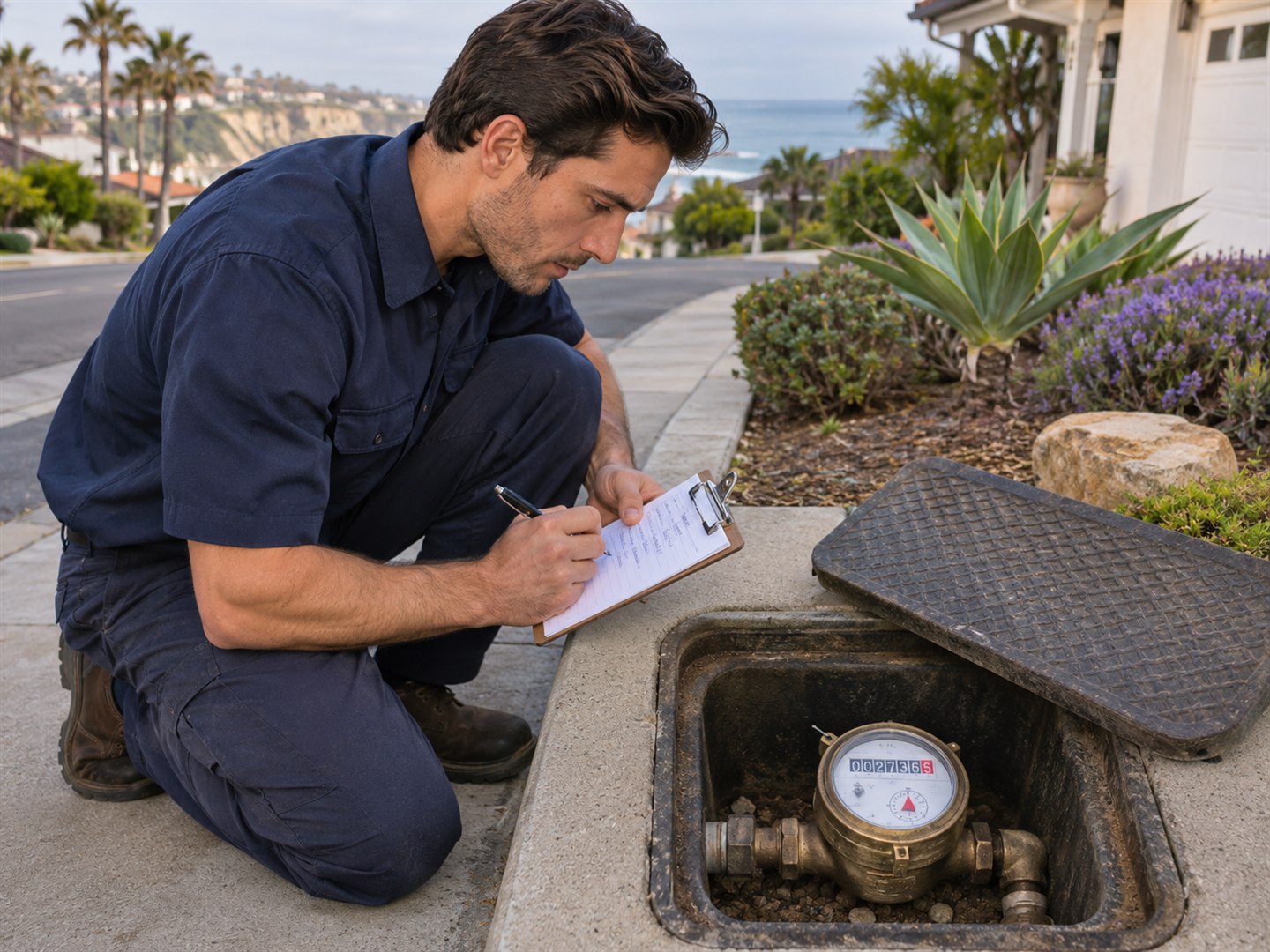
A bill that rises without a change in habits, or a water meter that keeps moving when nothing is running, is one of the clearest signs of a supply leak somewhere in the system.
A hidden plumbing leak rarely announces itself. It shows up as a higher water bill, a stain that slowly grows, or the faint sound of water when every tap is closed. We help Dana Point homeowners trace the source and plan a repair that limits disruption.
Pressurized supply lines carry water all the time, so a leak in one can run day and night. These are the clues homeowners most often notice first.
A bill that rises without a change in habits, or a water meter that keeps moving when nothing is running, is one of the clearest signs of a supply leak somewhere in the system.
Stains, bubbling paint, soft drywall, swollen baseboards or a damp sink base can indicate a leak in a nearby supply or drain line.
A hiss or trickle inside a wall or under the floor when all fixtures are off suggests water is moving through a pipe that should be still.
A warm patch on a tile or concrete floor can point to a hot water line leaking below a slab. Lifting flooring or unexplained dampness at floor level is another clue.
Water damage does not always come from the same place. Sorting out which type of moisture you are dealing with keeps the investigation and the repair focused.
| Type | How it behaves | Typical clues |
|---|---|---|
| Supply leak | Pressurized, so it can leak constantly, even when no one is using water | Meter movement with fixtures off, rising bills, steady dampness, warm floor spots on hot lines |
| Drain leak | Only leaks when water drains through that line | Dampness that appears after showers, laundry or dishwashing, often below the fixture |
| Non-plumbing moisture | Tied to weather, humidity or outdoor water rather than pipes | Stains after rain, condensation on cold surfaces, irrigation overspray against walls |

With water use stopped, the meter shows whether a supply leak is likely and roughly how active it is.
Closing fixture and branch valves one at a time helps rule out toilets, faucets and appliances and narrows the search to a specific section of pipe.
Using the symptoms, the layout of the plumbing and appropriate testing methods, we work toward the most likely location before any access opening is made.
Describe what you have noticed, from meter readings to damp spots. We will help you judge how urgent it is and what the next step should be.
Once the leak is located, the repair plan depends on where it is and what caused it. A leaking compression fitting under a sink is a quick, contained repair. A pinhole in a copper line inside a finished wall, or a hot water line below a slab, takes more planning.
Pinpointing the source before opening anything lets us keep access openings as small and well placed as practical. We explain where an opening is needed and why, and we discuss what restoration of drywall or flooring might involve afterward.
For an isolated failure, repairing the damaged section is often the sensible choice. If the pipe shows wear in several places, or reaching a below-slab line would be highly disruptive, rerouting that portion of the line may be worth discussing. We lay out the trade-offs so you can decide.
Isolating the affected branch, rather than shutting off the whole house, can keep the rest of your home running while the repair is planned. If the leak is on the main service line, we explain that as well; our water line repair page covers that side of the system. For drips at faucets or toilets, see toilet and faucet repair.
Leak repair is just one part of plumbing help for Dana Point homeowners that we provide around the clock.
Water from a hidden leak can soak into insulation, framing, soil or a slab before it ever shows on a surface. That is why water use, meter movement and sound are often the first clues rather than visible puddles.
A warm area on a slab floor can indicate that a hot water line underneath is leaking. It can also have other causes, so it is worth confirming with meter checks and isolation before planning any access.
The goal is to keep access work to a minimum. Locating the leak as precisely as practical before opening anything usually means a smaller, better-placed opening. We discuss the location and size with you first.
Yes. Refrigerator ice-maker lines, dishwasher connections, washing machine hoses and water heaters are common sources. Isolating appliances one at a time during the meter check helps confirm or rule them out before looking inside walls or floors.
If water is actively escaping or damage is spreading, closing the main shutoff is a sensible precaution. If the leak is slow and isolated to one fixture, closing that fixture's valve may be enough.
Whether it is a rising bill or a stain that will not go away, call to talk it through. We will help you trace the source and decide on a repair that fits your home.