Buildup and foreign objects
Grease, wipes and other debris can collect in the main line. Clearing may resolve it, but repeat blockages suggest something in the pipe is catching material.
When drains all over the house slow down or back up together, the issue is usually not a single clog. We investigate the main drain and sewer lateral, explain what is causing the recurring sewer backup, and talk through the repair options that fit your property.
A single slow sink is a drain cleaning job. The signs below suggest the restriction is in the main building drain or the sewer lateral, the pipe that carries wastewater from your home toward the public sewer.
If you are seeing these symptoms, limit water use until the line is checked. Running the washing machine or taking showers can push wastewater out of the lowest drain in the house.
Blockages, roots, misalignment and structural damage can all cause the same backups. Telling them apart is what makes the difference between a lasting repair and a repeat call.
Grease, wipes and other debris can collect in the main line. Clearing may resolve it, but repeat blockages suggest something in the pipe is catching material.
Roots seek moisture and can enter through joints or cracks, growing into a mass that traps waste. Clearing roots restores flow, though the entry point remains.
Soil movement can shift pipe sections out of line or create a low spot, often called a belly, where water and solids settle and slow the flow.
Age, material and ground conditions can lead to cracks, breaks or a deteriorated pipe wall. These typically call for a section repair or replacement.
Because these causes overlap, clearing the line on its own is not always the final answer. A line that keeps backing up after clearing is a sign that something structural, like a root entry point or a low spot, is still in place. Identifying which cause, or combination of causes, is present is what makes a lasting sewer lateral repair possible.
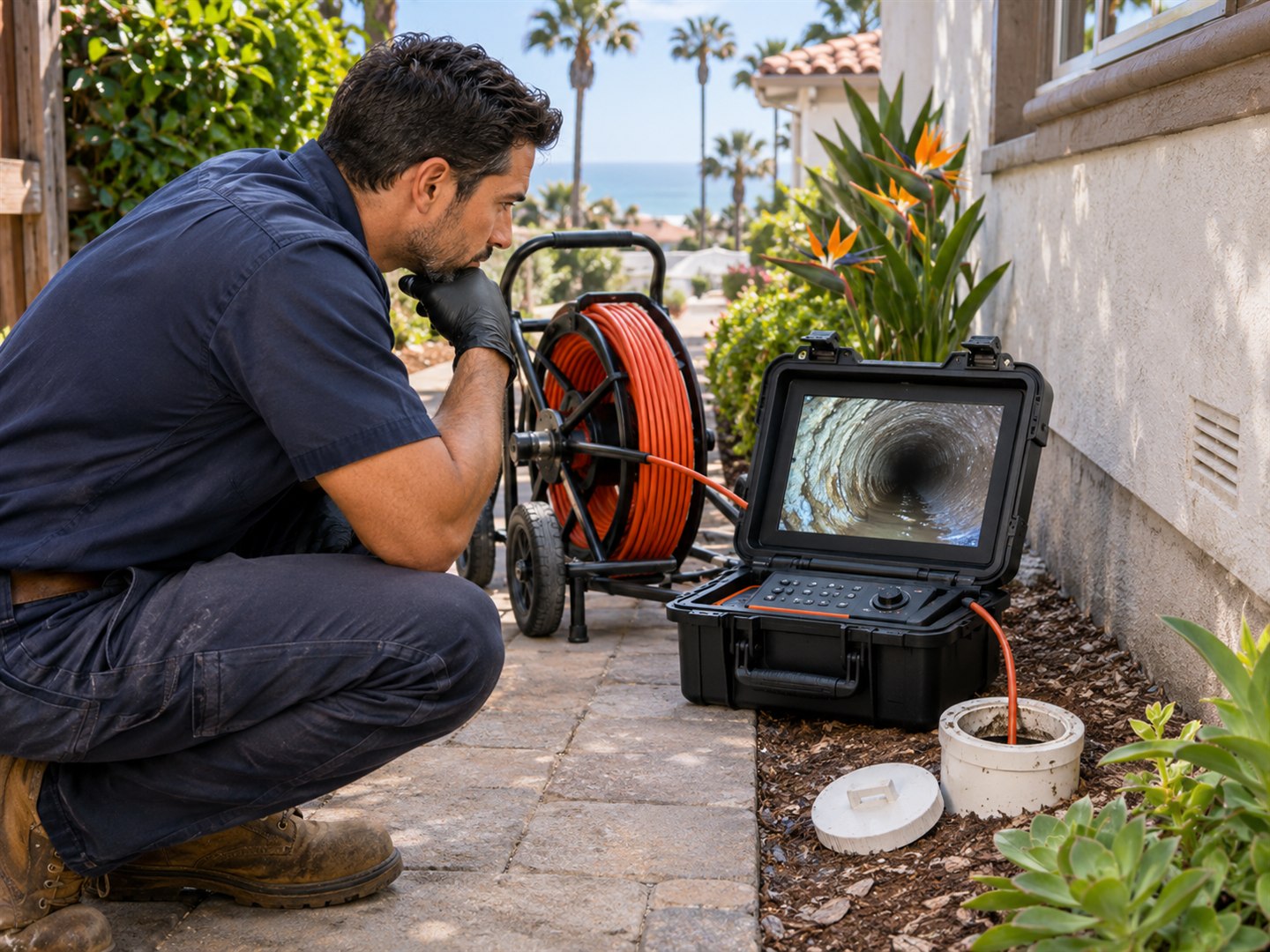
Investigating a sewer problem starts with access. An exterior cleanout is the most direct way into the line; where none exists, access may be possible through a fixture or roof vent, or a new cleanout may be worth discussing.
Where appropriate, a camera inspection lets us see the condition of the pipe instead of guessing: where roots enter, whether a joint is offset, or where a section has failed. It also helps locate the problem and estimate its depth, which affects the repair plan.
We share what the inspection shows and explain it in plain terms before any repair is proposed.
Let us find out what is happening in the line so the next fix addresses the cause, not just the symptom.
No two sewer repairs are identical. Once the cause is known, these factors determine the scope and the approach.
A defect near the house, under a driveway or hardscape, or close to the property line each involves different access and restoration considerations.
A single failed joint may support a section repair, while widespread deterioration can make replacing a longer length the better long-term choice.
Pipe depth, material, landscaping, structures and shared lines in multi-unit buildings all influence which methods are practical.
Responsibility for the lateral can depend on where the defect sits and on the applicable utility or municipal rules. We help you understand what applies once the location is confirmed.
Repair methods are chosen after diagnosis and discussed with you, including what each involves for digging, access and restoration. This is part of the plumbing help for Dana Point homeowners we provide every day of the week.
Clearing removes the blockage but not the reason it formed. Roots entering at a joint, a sag that collects solids, or a damaged section can cause the same backup to return. An inspection, where appropriate, identifies the underlying cause.
It depends on where the problem is located and on the applicable utility or municipal rules for your property. Once the defect is located, we can help you understand which section it is in.
Not necessarily. The scope depends on the location and extent of the damage. Pinpointing the problem first helps limit excavation to what the repair actually requires, and we discuss the options and their impact with you.
Clearing removes the roots that are present, but roots can return as long as the joint or crack they entered through remains. Lasting results usually depend on repairing or replacing the affected section, which is why finding the entry point matters.
Stop using water in the home, avoid flushing, and keep people and pets away from any wastewater. If sewage has entered living areas, avoid direct contact.
Call to describe what is backing up and how often. We will help you understand the likely cause and arrange an inspection.