Constant refilling or hissing
A flapper that no longer seals, a chain that is too short, or a fill valve set too high can let water trickle into the bowl. These wear parts are usually replaced rather than repaired.
A running toilet or a faucet that will not stop dripping wastes water every hour it goes unfixed. We repair worn parts, seals and supply connections on the fixtures you use every day, and help you decide when replacing the fixture is the better choice.

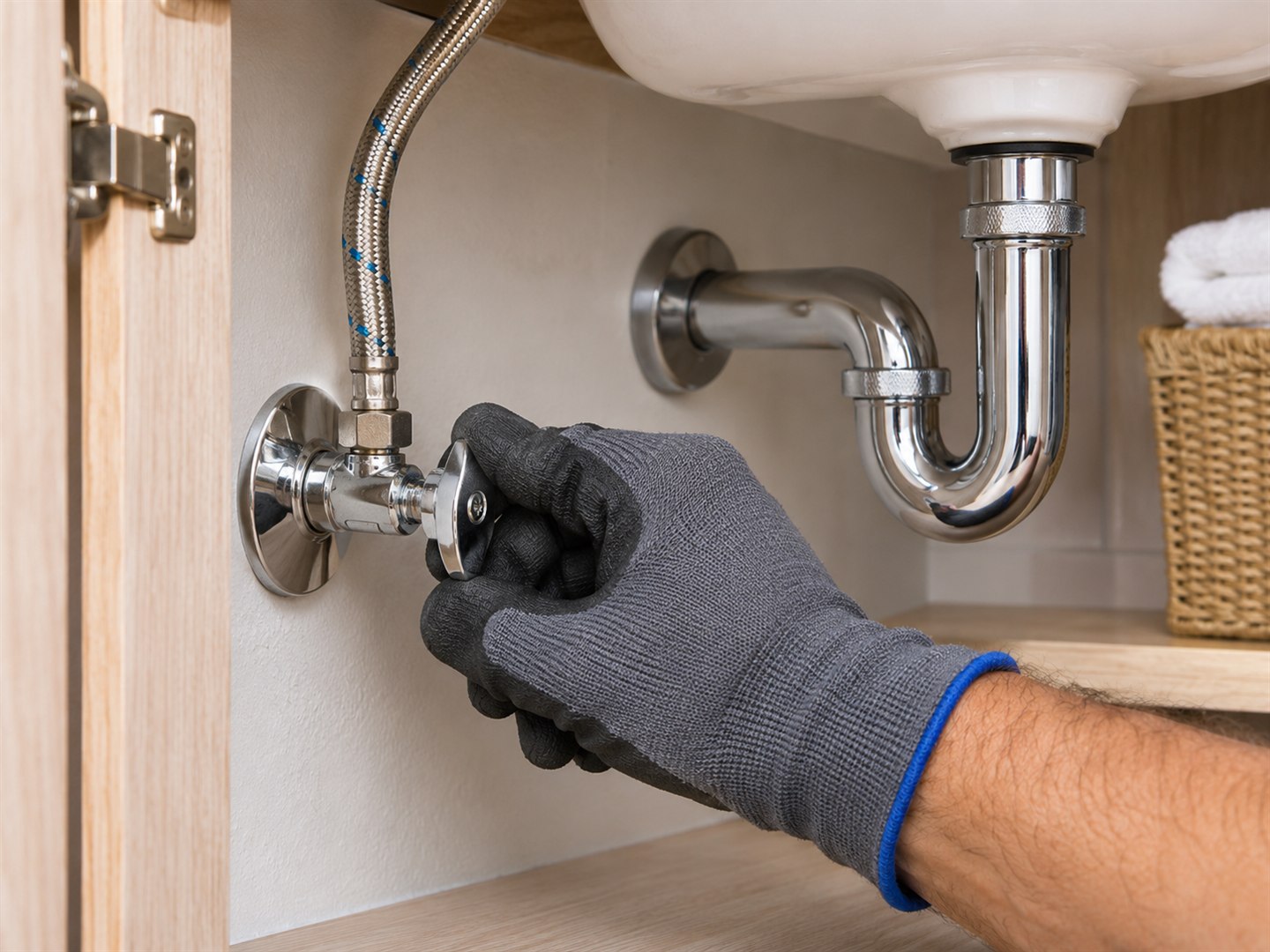
Most toilets and sinks have their own shutoff valve, usually a small oval handle on the wall or floor behind the toilet or inside the sink cabinet. Turning it clockwise stops water to that fixture without shutting off the whole house.
If a fixture is leaking, closing its shutoff is the safest thing a homeowner can do. If the valve will not turn or starts to drip when moved, leave it and use the main shutoff instead; older valves can fail when forced, and replacing worn shutoffs is a common part of fixture repair.
Toilets have only a handful of working parts, so most problems trace back to one of them.
A flapper that no longer seals, a chain that is too short, or a fill valve set too high can let water trickle into the bowl. These wear parts are usually replaced rather than repaired.
Low tank water level, a partially opening flapper, or mineral deposits in the rim holes can weaken a flush. If the bowl drains slowly or rises, the cause may be a clog instead.
Water at the floor after flushing often means the wax ring seal has failed or the toilet is rocking on its flange. It can also be condensation or a supply connection leak, so we confirm the source first.
Kitchen, bathroom and tub faucets come in several designs, including cartridge, ball, ceramic disc and older compression styles. Each wears out in its own way, and parts are rarely interchangeable between brands, so identifying the faucet comes before choosing a repair.
Depending on the faucet design, a worn cartridge, washer, seat or seal lets water past when the handle is off. Identifying the faucet type and brand helps us find compatible parts.
Leaks at the handle or where the faucet meets the counter usually come from worn O-rings or internal seals rather than the supply lines.
Braided or rigid supply lines, compression nuts and angle stops can drip or seep. A damp cabinet floor is worth checking quickly before it damages the cabinet.
If water appears under the sink only when it is draining, the trap, tailpiece or drain connection is the likely source, not the faucet itself.
A toilet that gurgles or backs up, or a sink that drains slowly, often points to a clog that needs drain cleaning. A water bill that stays high after a toilet or faucet is fixed, or dampness in a wall behind a fixture, can point to a hidden leak worth investigating through leak detection and repair.
It varies with the size of the leak, but a toilet that runs constantly can use far more water than normal flushing. Because it happens silently, a higher water bill is often the first sign.
A rocking toilet can break the wax seal at the flange and lead to leaks at the base. Tightening alone may not fix it; the seal and flange condition should be checked.
Most dripping faucets can be repaired by replacing the cartridge, washer or seals, as long as compatible parts are available. Replacement makes more sense if the body is corroded or parts are hard to find.
Frequent clogs can come from flushing items that do not break down, a weak flush caused by low tank water or blocked rim holes, or a restriction further down the drain. If plunging only helps for a short time, the drain line itself may need clearing.
Supply lines and shutoff valves are often overlooked. If they show corrosion, bulging, kinks or stiffness, replacing them during a fixture repair is worth discussing.
Tell us which toilet or faucet is acting up and what it is doing. Small repairs today help prevent wasted water and cabinet damage.
Fixture repairs are one part of our full range of home plumbing services. These related pages cover problems that often show up alongside them.
Call to describe the fixture and the problem. We will repair what is worn, or help you choose a replacement when that makes more sense.